

Published on Jan 09, 2026
Stealth means 'low observable'. The very basic idea of Stealth Technology in the military is to 'blend' in with the background. The quest for a stealthy plane actually began more than 50 years ago during World War II when RADAR was first used as an early warning system against fleets of bombers. As a result of that quest, the Stealth Technology evolved.
Stealth Technology is used in the construction of mobile military systems such as aircrafts and ships to significantly reduce their detection by enemy, primarily by an enemy RADAR. The way most airplane identification works is by constantly bombarding airspace with a RADAR signal.
When a plane flies into the path of the RADAR, a signal bounces back to a sensor that determines the size and location of the plane. Other methods focus on measuring acoustic (sound) disturbances, visual contact, and infrared (heat) signatures. Stealth technologies work by reducing or eliminating these telltale signals. Panels on planes are angled so that radar is scattered and no signal returns. Planes are also covered in a layer of absorbent materials that reduce any other signature the plane might leave. Shape also has a lot to do with the `invisibility' of stealth planes. Extreme aerodynamics keeps air turbulence to a minimum and cut down on flying noise. Special low-noise engines are contained inside the body of the plane. Hot fumes are then capable of being mixed with cool air before leaving the plane. This fools heat sensors on the ground. This also keeps heat seeking missiles from getting any sort of a lock on their targets.
Stealth properties give it the unique ability to penetrate an enemy's most sophisticated defenses and threaten its most valued and heavily defended targets. At a cost of $2 billion each, stealth bombers are not yet available worldwide, but military forces around the world will soon begin to attempt to mimic some of the key features of stealth planes, making the skies much more dangerous.
With the increasing use of early warning detection devices such as radar by militaries around the world in the 1930's the United States began to research and develop aircraft that would be undetectable to radar detection systems. The first documented stealth prototype was built out of two layers of plywood glued together with a core of glue and sawdust. This prototype's surface was coated with charcoal to absorb radar signals from being reflected back to the source, which is how radar detection systems detect items in the air.
Jack Northrop built a flying wing in the 1940's. His plane was the first wave of stealth aircraft that actually flew. The aircraft proved to be highly unstable and hard to fly due to design flaws. The United States initially orders 170 of these aircraft from Northrop but cancelled the order after finding that the plane had stability Flaws. Then in 1964, SR-71 the first Stealth airplane launched. It is well known as 'black bird'. It is a jet black bomber with slanted surfaces. This aircraft was built to fly high and fast to be able to bypass radar by its altitude and speed.
The idea is for the radar antenna to send out a burst of radio energy, which is then reflected back by any object it happens to encounter. The radar antenna measures the time it takes for the reflection to arrive, and with that information can tell how far away the object is. The metal body of an airplane is very good at reflecting radar signals, and this makes it easy to find and track airplanes with radar equipment.
The goal of stealth technology is to make an airplane invisible to radar. There are two different ways to create invisibility: The airplane can be shaped so that any radar signals it reflects are reflected away from the radar equipment. The airplane can be covered in materials that absorb radar signals.
To make a stealthy aircraft, designers had to consider six key in gradients:
1. They need to reduce the imprint on the radar screen.
2. Turn down the heat of its infrared picture.
3. They need to reduce muffling noise.
4. They need to reduce the turbulence.
5. Making the plane less visible.
6. Stifle radio emissions.
5.1 RADAR ECHO REDUCTION
The airplane can be shaped so that any RADAR signals it reflects are deflected away from the RADAR equipment. Most conventional aircraft (fig2.3.1) have a rounded shape. This shape makes them aerodynamic, but it also creates a very efficient radar reflector. The round shape means that no matter where the radar signal hits the plane, some of the signal gets reflected back:
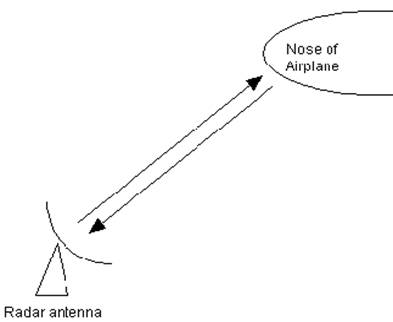
Fig 5.1.1.1.Conventional Aircraft-Very efficient radar reflector
A stealth aircraft (fig.2.3.2), on the other hand, is made up of completely flat surfaces and very sharp edges. When a radar signal hits a stealth plane, the signal reflects away at an angle, like this:
In addition, surfaces on a stealth aircraft can be treated so they absorb radar energy as well. The overall result is that a stealth aircraft like an F-117A can have the radar signature of a small bird rather than an airplane. The only exception is when the plane banks — there will often be a moment when one of the panels of the plane will perfectly reflect a burst of radar energy back to the antenna.
A second way of stopping RADAR reflections is by coating the plane with material that soaks up Radar energy. Radar absorbing coatings can be applied to the surface of the body, which effectively drain the energy of the radar signal. For example, Radar Absorbent Material (RAM), coatings designed to suck in and dissipate the electromagnetic energy of radar wave instead of reflecting it back to the source.
As its name implies, RAM is intended to reduce the scattered signal by absorbing some part of the incident radiation. Microwave energy is converted into heat energy with hardly any noticeable temperature rise because the energies involved are extremely small. Various kinds of materials can be made to absorb microwave energy by impregnating them with conducting materials such as carbon and iron.
In the main, there are two currently used kinds of absorbers, called di-electric RAM and magnetic RAM. Addition of carbon products in an insulating material introduces electric resistance and changes the electrical properties. Hence carbon-based absorbers are called dielectric RAM. The most familiar examples are pyramidal absorbers found in anechoic chambers. Dielectric RAM is usually too bulky and fragile and not attractive where space is limited and severe mechanical vibrations exist. Magnetic RAM uses iron products such as carbonyl iron and iron oxides called ferrites. Iron effectively dissipates radar waves and has been used in aircraft paint. It is quite effective against the high frequency radars used in modern fighters. Unlike dielectric RAM, magnetic RAM is compact, thin and of adequate strength to withstand loads and an abrasive environment. Nevertheless, its thickness does rob volume from volume limited aircraft. Some important RAM's used today are,
Its construction consists of a conductive carbon coated "lossy" fabric, separated from a conductive ground plane by a low dielectric foam core.
Different foam materials are,
a) single layer foam
b) multi layer foam-made of 3 single layers
c) reticulated foam
d) weather proof foam
The magnetic absorbers are elastomeric moulded sheets loaded with magnetic filler. The use of the magnetic filler provides the best performance at the minimum thickness. Different magnetic absorbers are,
a) tuned frequency magnetic absorbers
b) surface wave absorbers
c) multiband absorbers
Core material is a broadband microwave absorbing honeycomb core. Normally uses either aramid or fiberglass honeycomb core and applies a lossy coating to it
It is the only electromagnetic Radar Absorbing Material that may be retrofitted to existing material because of its low weight and very low thickness.
| Are you interested in this topic.Then mail to us immediately to get the full report.
email :- contactv2@gmail.com |
